WELCOME TO OUR BLOG

We're sharing knowledge in the areas which fascinate us the most
click

How Tight Should A Waist Trainer Be

By MISTHIN August 1st, 2026 49 views
Catalog

There is a common misconception in the fitness community: If it doesn’t hurt, it isn’t working.However, as a brand that prioritizes both your silhouette and your health, we know that true sculpting happens in the "Goldilocks Zone"—where compression meets comfort. If you are unsure whether the waist trainer you have chosen is too tight or not tight enough, this guide will help you find the right waist-shaping product for you.

Signs of a Correct Fit vs Too Tight

Before diving into advanced testing, let’s establish the non-negotiables. Regardless of your goals, your waist trainer is too tight if you experience:

  • Shortness of Breath: You should be able to take full, deep breaths without effort.
  • Sharp Pinching: The boning should hug your torso, not dig into your ribs or hips like a knife.
  • Numbness or Tingling: This is a sign of nerve compression—take it off immediately.
  • Severe Acid Reflux: Excessive pressure on the stomach can force gastric acid upward, causing heartburn.

The Simple Finger Test: You should be able to slide one or two fingers under the top or bottom edge of the garment. If there is absolutely zero "give," you need to size up.

The "Sponge vs. Brick" Rule: Why Your Body Type Matters

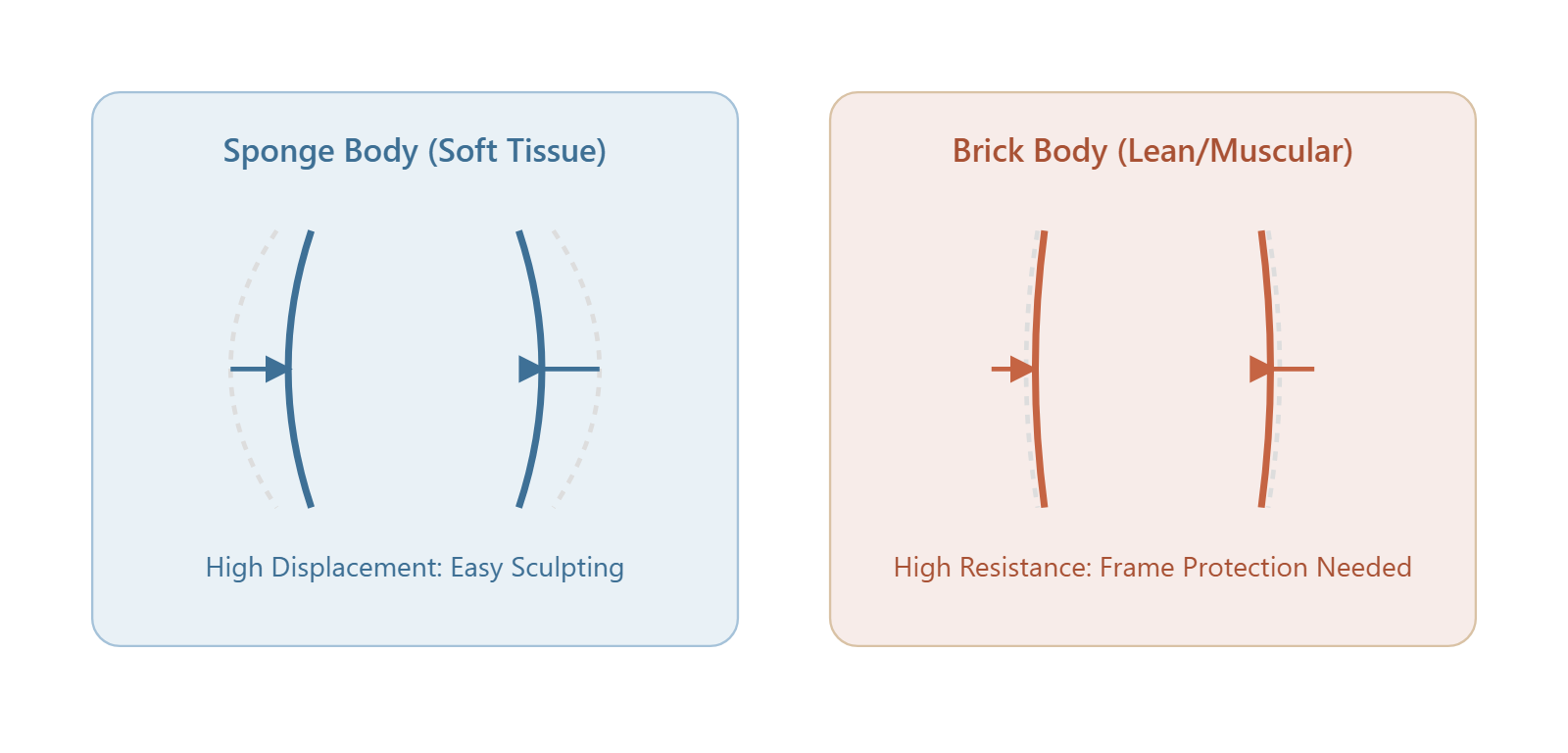
Most sizing guides assume everyone’s waist is made of the same stuff. But the truth is, your body type determines how much pressure you can handle.

  • The "Sponge" Body (Soft Tissue): If your midsection is soft and has a bit of "squish" (more body fat), you’re like a sponge. Fat is easily moved and compressed. You might find that a very tight trainer feels like a firm, supportive hug because the fat acts as a natural cushion. You can usually go a bit tighter without feeling sharp pain.
  • The "Brick" Body (Firm/Lean Tissue): If you are athletic, have strong abs, or a naturally wide ribcage with very little body fat, you’re like a brick. Muscle and bone don’t compress. A trainer that is even slightly too tight will feel like a metal clamp because the pressure has nowhere to go but directly onto your ribs. You must prioritize comfort and flexibility over extreme curves.

The Golden Rule: The leaner you are, the more "give" you need in your waist trainer. Don't fight your frame!
What size waist trainer should i get

Accurately measuring your waist circumference is crucial before purchasing a waist brace. This ensures you select the right size and achieve the desired results.
Most people fail their fit because they only measure their waist as a single horizontal line. To get the "Goldilocks fit," you need to map your torso in three dimensions:
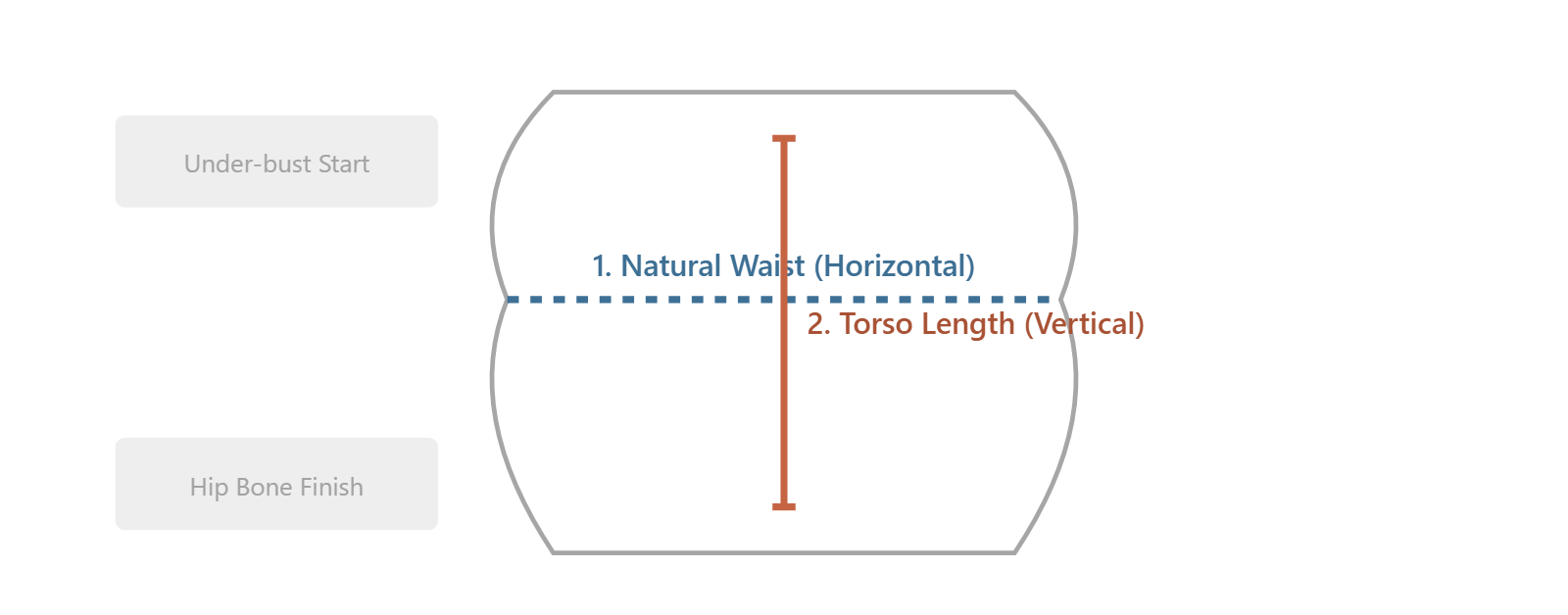
  • Point 1: The Natural Waist (Horizontal) Find the narrowest part of your midsection, usually an inch or two above your belly button.
    • The Pro Tip: Do NOT suck your stomach in. Stand naturally and exhale halfway before recording the number. If you take your measurements while holding your breath, the size will be too tight and constricting during the shaping process.
  • Point 2: The Torso Length (Vertical) This is where most buyers make mistakes. Measure vertically from just under your bust to the top of your hip bone.
    • Why it matters: If you have a "Short Torso," a standard-length trainer will dig into your breasts or thighs. If you have a "Long Torso," a short trainer will leave a "muffin top" gap. Matching the trainer's height to your vertical real estate is key to all-day comfort.
  • Point 3: The "Sponge vs. Brick" Adjustment
    • For "Sponges": If your measurement falls between sizes (e.g., 31.5 inches), you can safely round down to the smaller size, as your soft tissue will compress.
    • For "Bricks": If you are between sizes, always round up. Since your ribs and muscles won't budge, a size too small will be unwearable.
Check out MISTHIN's latest waist trainer products and find the one that suits you best.

The 3-Step Dynamic Test 

Standing still in front of a mirror isn't enough to verify a fit. You must test the garment in motion:

  1. The Sitting Test: Sit down in a chair. Does the waist trainer push up into your breasts or dig painfully into your thighs? While some shifting is normal, it shouldn't restrict your ability to sit comfortably for 30 minutes.
  2. The Post-Meal Test: Pressure naturally increases after eating. If you feel immediate bloating or discomfort after a light meal, the setting is too restrictive for daily wear.
  3. The Range-of-Motion Test: Drop a pen on the floor and pick it up. If you cannot bend slightly at the hips or knees without feeling a "stabbing" sensation, the compression is excessive.

The "Red Mark Rule" (Recovery Metrics)

It is normal for a waist trainer to leave slight indentations on the skin—similar to the band of a bra or tight socks. However, these marks are a diagnostic tool for your skin health.

The 30-Minute Threshold:

  • Normal: Faint marks that disappear within 15–30 minutes of removal.
  • Warning: Deep, dark red ridges that last for hours or cause itching.
  • Danger: Broken capillaries, bruising, or skin discoloration.

If your skin isn't recovering within 30 minutes, the friction and pressure are damaging your dermal layers. Increase the lacing gap or move to the next set of hooks.

FAQ: Expert Answers to Your Most Common Questions

1. Will wearing a waist trainer flatten your stomach?

It provides an instant flattening effect by compressing soft tissue and reducing water retention. However, this is temporary. For long-term fat loss, it must be paired with core-strengthening exercises and a healthy diet.

2. How long does it take for a waist trainer to flatten the stomach?

Visually? Immediately. For a more lasting silhouette change, most users report visible progress after 4-8 weeks of consistent wear

3. How to know if a waist trainer is working?

You should feel a firm, supportive "hug" that improves your posture and smooths your midsection. If you can breathe easily but notice a significant curve in the mirror, it is working. If you feel pain, it’s not "working"—it’s damaging.

4. What size should I get if I’m a Medium, Large, or XL?

Never buy based on your dress size (M/L/XL). Different brands have different scales. 
The Rounding Rule: If you are between sizes, "Sponges" (soft tissue) should round down; "Bricks" (lean/muscular tissue) must round up to protect their ribs.

5. What happens if I wear a waist trainer every day for 8 hours?

If your trainer is high-quality and fits correctly, it can help maintain a consistent silhouette. However, wearing it for 8 hours straight without "Seasoning" (gradual break-in) can weaken core muscles. We recommend a maximum of 6-8 hours with frequent "core-engagement" breaks.

6. How to wear a waist trainer while working out?

Switch to a Velcro Fitband or a flexible wrap. Avoid steel-boned corsets for heavy cardio or lifting, as they restrict the deep breathing required for safe exercise.

7. How to wear a waist trainer under clothes?

Choose a seamless, thin latex or fabric trainer with a flat-hook closure. Avoid styles with bulky laces or thick Velcro if you want a "stealth" look under form-fitting dresses.

8. How to put on a waist trainer wrap or Velcro style?

Center the wrap at the back of your waist.
Pull the inner bands tight across your belly.
Secure the outer Velcro straps one by one, ensuring the pressure is even.
Pro Tip: Always fasten from the bottom up to "lift" the midsection rather than pushing it down.

Final Verdict

A waist trainer should feel like a firm hug, not a restrictive cage. By understanding your body’s "squish," mapping your torso vertically, and monitoring the "Red Mark Rule," you can safely achieve the silhouette you’ve always wanted.

Does a Waist Trainer Help With Loose Skin
Previous
Does a Waist Trainer Help With Loose Skin? What It Can and Can’t Do
Read More
Distributor Success Story: Scaling Globally with China’s Leading Waist Trainer Brand MISTHIN,Misthin Factory
Next
Distributor Success Story: Scaling Globally with China’s Leading Waist Trainer Brand MISTHIN
Read More